

The New Attack Surface in 2026: What Happens When AI Becomes Part of the Workplace?
- Cyber Security
-

By admin
- Oct 27, 2026
- 24 Views
Artificial intelligence is becoming part of everyday business operations. Employees use AI to summarize documents, analyze information, write code, and automate repetitive tasks. As these tools become connected to internal applications, databases, and business workflows, they also introduce new security considerations.
The challenge is no longer limited to protecting traditional systems. Businesses must also understand what their AI tools can access, how they handle information, and what actions they are allowed to perform.
According to the World Economic Forum’s Global Cybersecurity Outlook 2026, 87% of survey respondents identified AI-related vulnerabilities as the fastest-growing cyber risk during 2025. The finding highlights why AI security deserves greater attention as organizations expand their use of the technology.
What Is the AI Attack Surface?
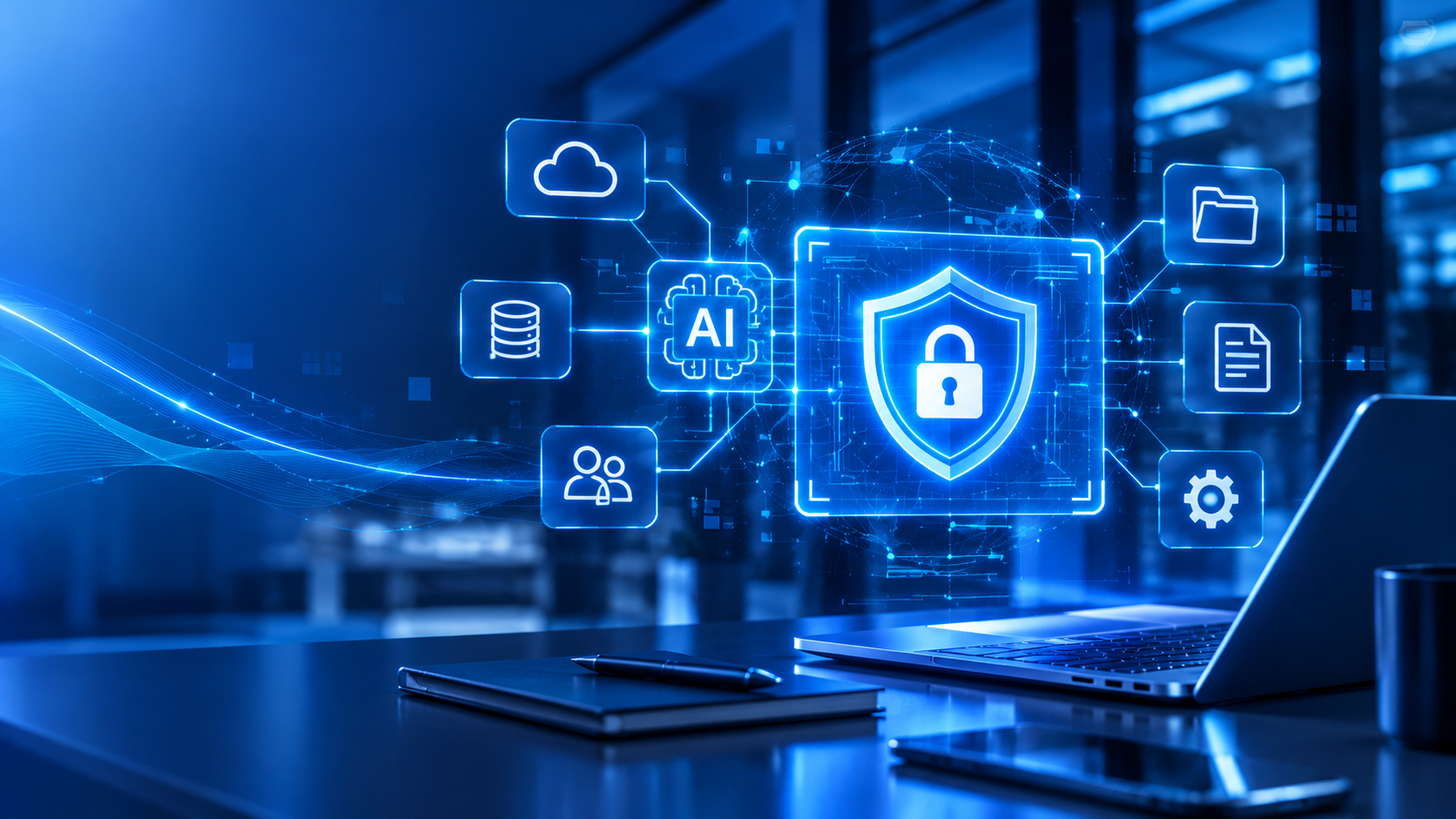
An attack surface refers to the points through which a system could potentially be accessed, misused, or compromised. In a workplace that uses AI, this can include AI applications, connected databases, APIs, employee accounts, and automated agents.
Consider an AI assistant that can search internal documents, retrieve customer information, and update project records. Each integration creates another connection that needs to be secured. If the assistant receives excessive permissions or a connected application is poorly configured, sensitive information or business processes could be exposed to unnecessary risk.
Not every AI tool creates the same level of exposure. A standalone tool used to improve writing has a different risk profile from an AI agent that can access company systems and perform actions automatically. The more access and autonomy a system receives, the more carefully its security needs to be managed.
Three AI Security Risks Businesses Should Understand
1. Sensitive Data Exposure
Employees may enter confidential information into AI tools to get faster answers or complete tasks more efficiently. This could include customer details, internal documents, business plans, or other information that should not be shared outside authorized environments.
The risk depends on how the tool processes, stores, and uses the information, as well as the organization's settings and policies. For example, an employee might upload a confidential report to an unapproved AI service without realizing that the action conflicts with company policy.
Businesses need clear rules about which tools employees can use and what information they are permitted to share. Approved services should also be evaluated for their data handling practices and security controls.
2. Excessive Permissions and Unauthorized Actions
AI agents can go beyond generating responses. Depending on their configuration, they may retrieve files, send messages, update records, or interact with other applications.
These capabilities can improve efficiency, but excessive permissions can increase the impact of a mistake or compromise. An agent that only needs to summarize reports should not automatically receive permission to modify financial records or access unrelated customer data.
The principle of least privilege helps reduce this risk by granting each tool only the access required for its intended task. Sensitive or irreversible actions should also require additional verification or human approval.
3. Prompt Injection
AI systems can process instructions from many sources, including emails, documents, web pages, and other external content. Prompt injection occurs when malicious or misleading content attempts to manipulate an AI system into ignoring its intended instructions or performing an unintended action.
For example, an AI assistant asked to summarize a document could encounter hidden or misleading instructions within that document. If the system does not properly separate untrusted content from authorized instructions, it may respond in an unsafe way or attempt to use connected tools inappropriately.
Prompt injection cannot always be addressed by simply telling an AI model to ignore suspicious instructions. Businesses also need controls around what the AI can access, which tools it can use, and what actions it can execute.
How Can Businesses Secure AI at Work?
Securing AI requires more than selecting a capable model. Organizations need to consider the full environment surrounding the technology, from data access and integrations to monitoring and accountability.
Several practical measures can help:
-
Establish clear AI usage policies. Define approved tools, permitted use cases, and the types of information employees may share.
-
Apply least-privilege access. Give AI systems only the permissions necessary for their assigned tasks, and review those permissions regularly.
-
Require approval for sensitive actions. Keep human oversight for activities such as external data sharing, important record changes, and other high-impact operations.
-
Monitor activity and maintain logs. Track relevant AI interactions, tool usage, access attempts, and unusual behavior so potential issues can be investigated.
-
Assess integrations and dependencies. Review connected applications, APIs, and third-party services to identify weaknesses that could affect the wider environment.
-
Test and update security controls. Evaluate AI systems before deployment and reassess them as capabilities, integrations, and business needs change.
These measures should be proportionate to the risk. A tool used for low-risk writing assistance may not require the same controls as an agent that can access sensitive business systems.
AI Security Is a Business Responsibility
AI security is not only a technical issue. It also involves policies, employee awareness, operational processes, and clear accountability.
Teams adopting AI should understand both its capabilities and its limitations. IT and security teams need visibility into how these tools connect to existing systems, while business teams need guidance on using them responsibly. When AI can take actions automatically, organizations must also decide which decisions require human review and who is accountable for the outcome.
The goal is not to prevent employees from using AI. It is to enable useful adoption without introducing unnecessary risks to company data, systems, and operations.
Building a More Secure Digital Workplace with SOLU
As businesses connect more applications, devices, and data sources, maintaining visibility across the digital environment becomes increasingly important. Security measures are more effective when organizations understand how their systems interact and where access needs to be controlled.
At SOLU, we help organizations develop technology solutions tailored to their operational needs, connecting systems and data to support more integrated monitoring and informed decision-making. With the right approach to system integration, access management, and operational visibility, businesses can build a stronger foundation for adopting new technologies.
AI can create meaningful opportunities for productivity and innovation. The key is ensuring that security develops alongside those capabilities.
Adopt AI with confidence. Build security into every connection.
Share:
Request A Call Back
Your next big leap starts with a simple conversation, let's sparks the next big idea together
